Framing v. Perspective
Know your gear, a follow-up


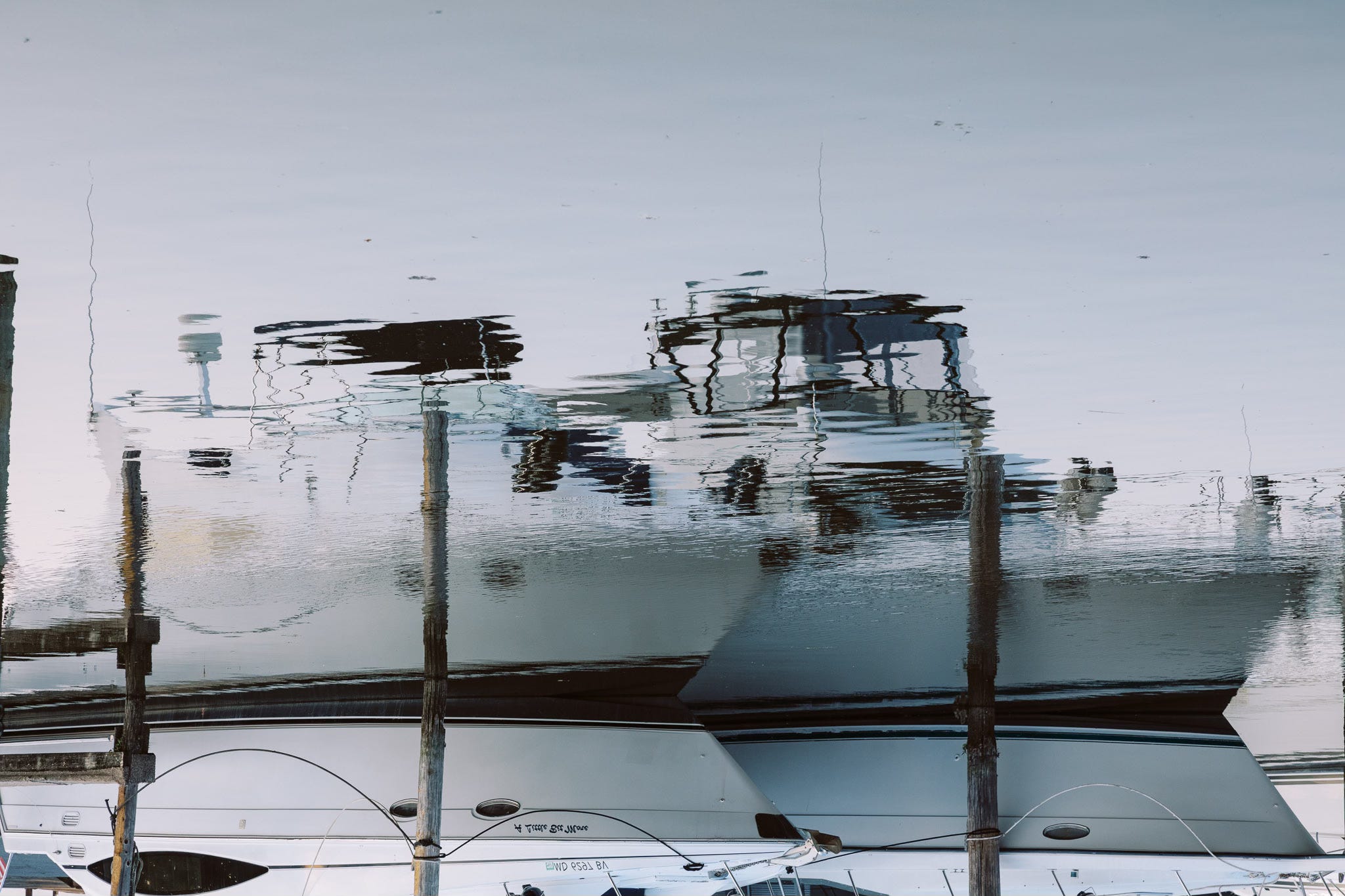
Spending most of my photographic life with prime lenses was a blessing. At first that prime lens only choice was completely driven by economic realites. Later that choice was for aesthetic and image quality considerations. For quite some time my preference for prime lenses has entirely been for size/weight and rendering reasons. Zoom lenses haven’t been a image quality compromise for a very long time. In a few cases top level zooms equaled or outclassed the image quality of their contemporary prime lenses of the same manufacturer. My biggest issue was size, weight, and handling. I still do not like huge lenses. If using a zoom I will typically choose an f/4 class zoom rather than the f/2.8 or even the f/2 class now available.
Was that size, handling, and sometimes quality advantage the “blessing” I referred to? No, not at all, the blessing was that I quickly developed a sense of the acute difference between framing and perspective. I touched tangentially on this difference way back in a newsletter I referenced in the subtitle. As specifically and succinctly as I can; perspective is entirely dependent on where one stands. Perspective has absolutely nothing to do with angle of view or in other words framing. These two elements of composition are completely unrelated.
Most readers are probably reaching for the comment button to tell me the above statement is completely wrong, etc, etc. Hold whatever thought you may have for a moment. Whatever your impulse was to correct my statement, it was probably due to an assumption that at any given focal length (angle of view) those two compositional elements are directly connected. You’re right, for the most part, if you never crop your images. Here’s the point; using your super-zoom or widest and longest lenses, stand in one spot, using your widest lens take a picture, then your longest. Crop the widest angle of view to match the framing of your longest. The perspective as you can now see more clearly is identical. You’ll see the same “compression” with your super-wide that you see with your tele. Depending on the aperture you used and a few other factors you’ll even start to perceive the DOF effects that are clear with your tele (yes, you will given enough resolution/pixels - anyone interested in debating this point, I’ll be happy to another day)
Now you cannot do this in reverse (with a single shot) as you cannot un-crop your tele to a super-wide angle of view but if you could you’d see the same thing. If you were super close with your tele and somehow un-cropped it to the same framing as the super-wide you’d see what is commonly referred to as “perspective distortion” with the closest element appearing super large compared to tiny things in the background behind it.
Where’s the blessing? Why is this important? The answer from my point of view is that perspective is more important to me than framing. See what I did there… ha, ha, ha. The blessing of having this where-you-stand/perspective thing radically and organically beat into my head from the beginning I always choose where I stand and perspective first, then I decide on the framing (angle of view/focal length) rather than the reverse of using a zoom to frame based on where I happen to be standing. I treat a zoom as a very quick and convenient way of switching lenses rather than using them to crop my framing based on an arbitrary choice of where I’m standing. Things look very different based on where you are standing they look pretty similar no matter how you frame. I walk around and closer or farther away a lot. I even do this in indoor portrait situations, 10ft, 6ft, 5ft, 4ft and 3ft are very different not even accounting for what is in or out of the frame. This is more true of giant distance variations outdoors.
What about practical matters? Yes, many situations and subjects will put a giant set of restrictions on what’s possible. You cannot move farther away due to obstructions of your subject matter. You cannot get as close as you want for many reasons (you probably can but don’t want to but that’s another story). Sure use a zoom to crop for an acceptable framing. That element of zooms can be a curse unless you are disciplined. In early phases of new project ideas or when searching for new ideas I regularly use only one prime while in exploratory stages. I’ll admit, a 50mm is a great starting point for me but on another day, looking at the same or similar subject matter for a project I switch it up and take a short tele or something significantly wider and use that instead.
There are a myraid of things that happen with these self-imposed restrictions. You’ll point your camera at different things, you’ll approach that same subject in a radically different way, you’ll find “the” visual voice or language that’s perfect for how you see that project going forward. If you do this a lot I will assure you that you’ll get to know your gear better and develop a significantly different way of working with your zooms. Even your “rejects” may inspire new projects of the same types of subject matter or new projects that use a particular visual voice discovered.
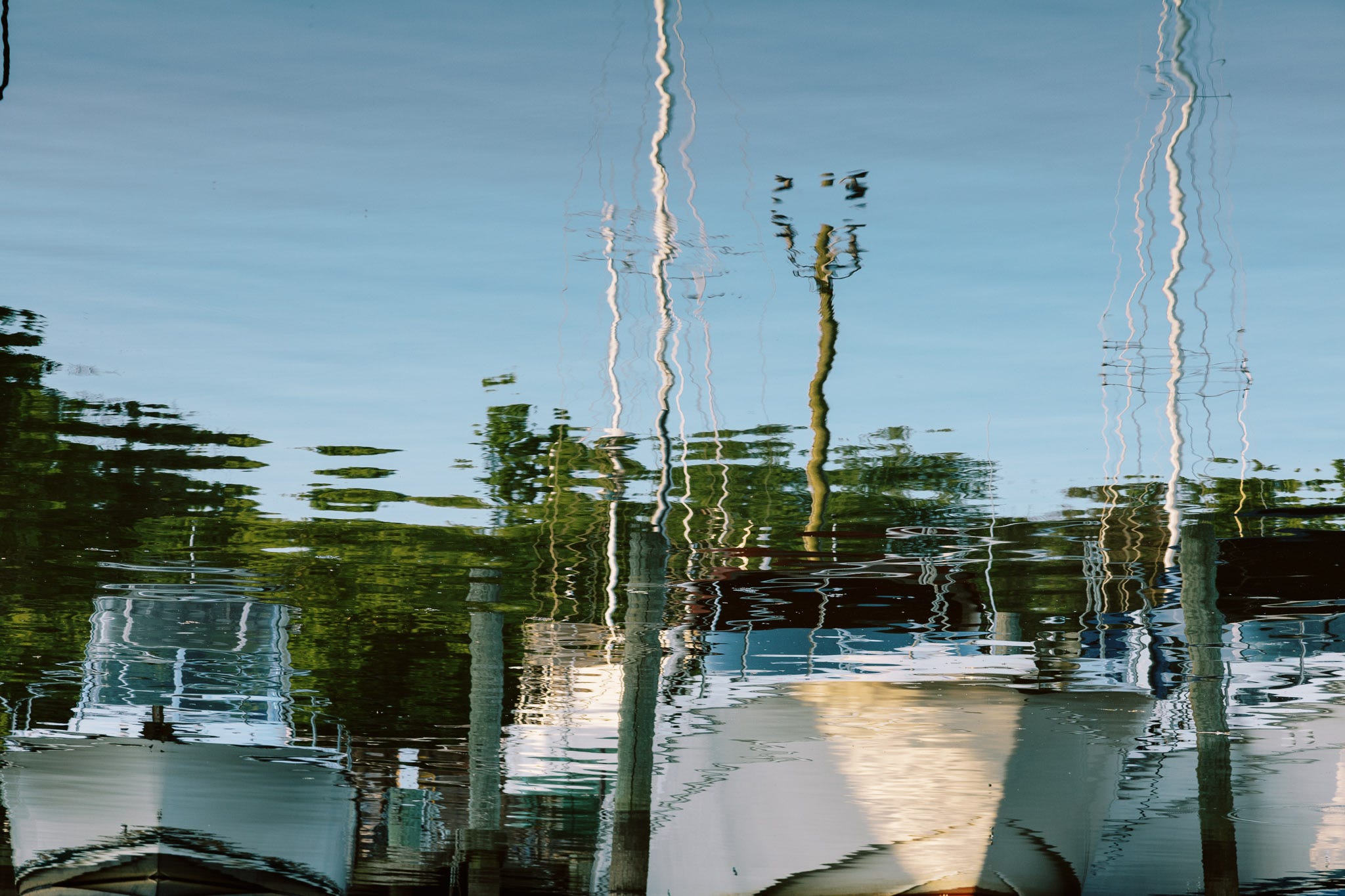
I regularly (but not super frequently) revisit old work. I pay no attention to my selects from any project or outing. Instead I am interested in my rejects. Sometimes I am interested in the “bad shots” if I marked them in some way during my first cull. Most of the time I look at the rejects that are not mere duplicates of better shots. I look at good images, images I rated more than 1-star, that I just did not use for reasons that they just didn’t fit even though they were of the same subject matter. In some way the visual language was different. Many times that is entirely due to perspective.


I took a quick run through my Watercolors project I finished up last year. Within a few minutes I identified a somewhat related but completely different project hiding in the rejects, the pictures I decided didn’t fit into the final selection of Watercolors. The interesting commonality in all of these rejects was not the subject matter but the focal length I used when making them. The first few were made when I intentionally went out with a short tele during the first couple of ventures to determine a visual look and refine what I was trying to portray. I rated some of these compressed perspectives and tight crops as potential candidates.
As I was refining the visual language and presentation of the Watercolors project I used my 24-105 zoom as I was still not sure of what the visual languge cohesive aspect was. As I went forward frames made with the 105mm end were still flagged as potential candidates but grew fewer and fewer as I wrapped up shooting pictures. None of the frames shot beyond 50mm, having that tight field of view along with the associated compression ended up in the final selections. Looking at them in retrospect they are the fodder of a different and possibly related project.
I don’t know if and when I’ll pursue this next project. The subject matter may be similar, it might be different. I am pretty sure I’ll use a short to mid-range tele and a similar level of compression but I’ll probably change how I frame now that I can start to see the visual language of a project. I’ll use Subversion as a working title.


Let me know if you enjoy some of these random, early shots that are usually fodder for future work and reflections of how my particular photographic processes when making personal work. I thought it might be interesting or useful, especially the things that flow out of other small projects I’ve discussed previously. It also demonstrates how projects evolve and how the editorial process has to take into account the voice and cohesion of any given editorial endeavor. Sometimes even your favorite shot may belong in a different project than the one you end up with. More later as diversity or similarity are extremely dependent on how many images are going to be shown. Do I combine too many things in each newsletter? Framing, perspective, a sliver how lenses work in terms of focal length vs capture medium size (I could go on about this for days), editorial notions, processes, on-and-on? Are 1500 word newsletters too many? This newsleter could have been 15,000 which people tell me are WAY too many.
One of the goals we have for this newsletter is a policy of being an “open book” with respect to failures, processes, etc as we’ve not typically encountered things beyond the final product or mere summaries of the work process.
I really enjoyed this post, which has two big subject areas. Very thought-provoking! I use my primes more and more, and wrestle with the issue of perspective versus framing all the time - well put! I hope you continue to post thoughts like this.
The other subject you opened, how to use our back catalog in unexpected ways long after the original shoot is also important. I’m grappling with that issue, too! You might discuss this subject in its own series of posts.
Engaging presentation.
The images got me thinking about possibilities for creating collections based on tone. Perhaps a warm tone only further selected by image color palette consistency or by compatibility (complimentary dominant colors between images). The "softness" of your inverted reflections encouraged attention to image features beyond what might have been a more typical subject.